YOU KNOW ALL STATES DESTINATION IN ONE BLOG

Showing posts with label 26TH. Show all posts

Patna Museum - Patna Journey Will Complete After Visiting This Museum

with 0 Comment


PATNA MUSEUM

AT

PATNA


Patna Museum, also known as 'Jadu Ghar' in Hindi, is one of well preserved museum in the country which connect the glorious past with the modern age. Set up in the center of the city, the museum building houses splendid and large collection of artifacts of the periods belonging to Mauryan, Gupta, Sunga, Kushan, Mughals and British era. The museum boasts of few collection which are unmatched elsewhere.

The museum came into present form in 1917 AD in a architecturally beautiful building, built specially for it. Sir Edward Gait, Lieutenant Governor of Bihar and Odisha (1915-1920) was the founder of this museum. His bust stands inside the museum, near the entrance gate.  The museum is surrounded by a beautiful scenery park. A number of statues, such as of Lord Hardinge, Viceroy of India dots the campus.

The museum has a collection of over 45,000 exhibits, out of which only a small percentage of it are on display due to space constraint. The Relic casket, containing the mortal remains of Lord Buddha is one of its rare possessions. However the most famous collection of the museum is 'Didarganj Yakshi', the statue from 3rd Century BC. A brick sculpture of lord Buddha and stupas, named as Satabdi Smarak is situated in one of the corner of the museum.

A cafeteria (Sangrahalaya Vihar) managed by Bihar State Tourism Development Corporation and a souvenir shop managed by HHEC (Ministry of Textile, GoI) is present in one corner of the museum. The museum building also houses few government offices like office of the National Mission for Manuscripts, Govt. of India and Bihar Research Society. The museum also houses an auditorium, named as Jan Nayak Karpuri Thakur Auditorium at the back side. It was inaugurated in 2000.

The museum displays many archaeological things, coins, paintings, instruments, art objects, textiles, painting, bronze images, sculptures, thankas, terracotta images and many more things. It has displays the rare paintings during the British rule. The most prized possession of the museum is the sacred relics of Buddha. You can see all the things kept there.

Visiting Hour :   10:30 AM - 4:30 PM (Monday Holiday)
Entry fee :  Rs 15 (Indian Citizen), Rs. 250 (Foreigner)
Buddha relics gallery visit : Rs 100 (Indian Citizen), Rs. 500 (Foreigner)
Student group fee : Rs 2 per student on production of identity-card
Lock room fee : Rs 2 per bag
Auditorium fee : Rs 10,000

Photo clicking fee : If any one wants to click photos inside the museum, then one has to buy an extra ticket. Ticket rates are as follow : Rs 20 ( For Mobile camera), Rs 100 (Flash Camera), Rs 500 (Video Camera), Rs 5,000 (Commercial Recording). If anyone is found taking photos inside the premise without having proper ticket, then fine can be imposed by the museum administration.

Guide fee : The Museum offers guide facility to the desired person/persons based on following criteria : For 1 person, fee is Rs 25; for 2 to 5 persons, fee is Rs 50; and for 6 to 10 persons, fee is Rs 100

By Air


The flights of Indian Airlines, Sahara India, Air Deccan and Jet Airways connect Patna with Bombay, Calcutta, Delhi, Lucknow, Ranchi and many other major cities.

By Train


Patna is connected by rail to Bombay, Calcutta, Guwahati, Ranchi, Varanasi.

By Bus


All - weather motorable roads connect Patna with the rest of Bihar. There are also regular inter - state bus services. Regular direct bus services connect Patna to Calcutta, Rajgir, Nalanda, Pawapuri, Vaishali, Gaya-Bodhgaya, Ranchi, Raxaul, Muzzafarpur, Sasaram.


Skiing At Auli - It Is One Of The Most Excellent Snow-Covered Destination For Skiing Lovers

with 0 Comment


SKIING AT AULI


It wouldn’t be wrong to call Auli the Ski capital of India. Located at 2,500 to 3,050 meters, in Chamoli District of Uttarakhand, The month of December heralds the beginning of the skiing season, which bears witness to the commencement of several ski festivals, along with the National Skiing Championships.
The snowy excitement goes on all the way till March. Run and maintained by the Garhwal Mandal Vikas Nigam, the resort provides skiers with necessary equipment and all state-of-the-art facilities. Facilities of chair lift and a ski lift are available for skiers with the objective of conserving their time and labour.
The ski lift has been imported from France and is the longest one in the country. The ski slopes descend from 3,049 meters to 2,915 meters. Accommodation at the resort is warm, cozy and decent. With a 110-bed capacity, delicious food, adequate heating arrangements, hot water, medical facilities and congenial hospitality, there is no dearth of facilities at this very budget-friendly resort.
If it’s an excursion you’re interested in, a 16-kilometre drive to Joshimath will give you the benefit of exploring ancient temples dating back to 8 B.C. Auli is quite remote when it comes to accessibility, with the nearest railway station being Haridwar, 299 kilometers away and the closest airport, Jolly Grant at Dehradun, 273 kilometres away.
Snow-covered slopes aren’t just to be admired, but to be enjoyed. Skiing has gained popularity as an alternative sport in the winter months. At an elevation of 2,915 - 3,049 meters with five kilometers expanse of snow, Auli is offers perfect grounds for beginners and seasoned skiers alike. Coniferous and oak forests line the slopes.
The peaks of Nanda Devi, Kamet, Mana Parvat and Dunagiri can be seen from the location. Its importance as a venue of adventure sports lies in its natural advantages enhanced by state-of-the-art facilities. The adventurous skier can go for cross country runs covering 10 - 20 kilometers. For the less adventurous, ski touring the glaciers is another enjoyable option.
Besides Auli, other ski spots include Dayara Bugyal, Munsiyari and Mundali. Mundali is situated in Dehradun, 129 kilometres from the main Dehradun town. Mundali’s enormous skiing rings offer incredible sights of the Himalayan slopes.

By Air

Jolly Grant Airport is the nearest Airport to Auli situated at a distance of 286kms. Jolly Grant Airport is well connected to Delhi with daily flights. Auli is well connected by motorable roads with Jolly Grant Airport. Taxis are available from Jolly Grant Airport to Auli.

By Train

The nearest railway station to Auli is Rishikesh. Rishikesh railway station is situated 264kms before Auli on NH58. Rishikesh is well connected by railway networks with major destinations of India. Trains to Rishikesh are frequent. Auli is well connected by motorable roads with Rishikesh. Taxis and buses are available from Rishikesh, Srinagar, Rudraprayag, Chamoli, Joshimath and many other destinations to Auli.

By Bus

Auli is well connected by motorable roads with major destinations of Uttarakhand state. Buses to Haridwar, Rishikesh and Srinagar are available from ISBT Kashmiri Gate. Buses and Taxis to Auli are easily available from major destinations of Uttarakhand state like Rishikesh, Pauri, Rudraprayag, Karnaprayag, Ukhimath, Srinagar, Chamoli etc. Auli is situated only 14kms from Joshimath which lies on NH58.


Calangute Beach – Most Of The Tourists Like Better To Visit This Beach Only In December

with 0 Comment

CALANGUTE BEACH

AT

NORTH GOA


Calangute is the most popular beach with thousands thronging it in both the peak and off-season. The waves rise high above as you wash away your city blues, though swimmer need to be a trifle cautious because of the sudden drop and the rising waves. Experienced swimmers will, however, revel in the seas here.

Also called the ‘Queen of beaches’, Calangute is the largest beach in north Goa. Calangute along with Candolim, Baga and Anjuna form part of the beach stretch extending from just outside Panaji city to Fort Aguada. Located in North Goa, about 15 km from Goa’s capital Panaji, Calangute is home to one of the largest and commercialized beaches in Goa. Calangute beach is located between Baga and Candolim beach.

Years of tourism has brought in a tremendous change in the scenario. Hotels and guesthouses stretch uninterrupted from Calangute to Baga. The village of Calangute has all basic facilities like post office, banks, foreign exchange offices, resort companies, all kind of bars and restaurants, besides medical facilities. The number of internet cafes in Calangute might even exceed that of the entire city of Panaji.

Huge showrooms filled with exquisite handicrafts from Kashmir, Tibet, Indonesia, Rajasthan and other exotic places, line up the main road running towards Anjuna.

The beach is fringed with popular restaurants and hotels, including the Calangute Residency operated by GTDC. This long, seven-km sweep of sand located 15 kms from Panaji, is called the 'Queen of Beaches'.Calangute is also famous for its water sport activities. One can experience para-sailing, water surfing, banana ride, jet-ski.

Maximum visitors prefer to visit Calangute during Christmas and New Year. The beach, accommodation facilities, water sport activities makes Calangute one of the best places in Goa.Calangute is the best place to buy antiques, junk jewelry, sake boxes, beach wears also available. Handicrafts made in Kashmir, Tibet, Indonesia and Rajasthan are worth buying.

By Air


Goa International Airport at Dabolim near Vasco da Gama is the state’s only airport. It caters to domestic and international air services with at least two dozen arrivals from India and middle-eastern countries such as Abu Dhabi, Sharjah, Muscat, Doha, Dubai and Kuwait.

By Train


The South Western Railway and the Konkan Railway lines service the state of Goa. Madgaon and Vasco Da Gama are two major railway junctions in Goa.

By Bus


NH66 connects Goa to Mumbai in the north and Mangalore to the south.NH-4A connects Panaji to Belgaum in the east and other cities such as Bangalore, Kolhapur etc. NH-366 connects NH-66 to Mormugao Port from Cortalim.


Loktak lake – It Has Been A Natural Wealth Of Amazing Flora And Fauna By Floating Water Forever

with 0 Comment


LOKTAK LAKE

AT

BISHNUPUR


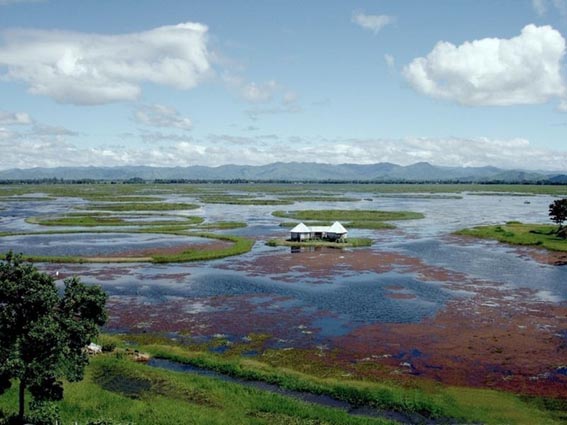
Loktak lake is situated in the BishnuFpur District of Manipur state of India. One of the most enchanting and biggest fresh-water lakes in the north-east is the Manipur's Loktak Lake.Loktak Lake of Imphal is the world’s only Floating Lake and seems like an entire ecosystem in itself. There is a varied collection of flora and fauna around this freshwater lake. 

The most important feature of the Lake are the ‘phumdis’ or the floating organic matter including soil can be seen floating on the Lake, giving the impression, of land floating on water.You can also find a diverse species of flora and fauna here. About, 116 species of birds and 233 species of fauna have been observed here. This rich biodiversity and combined with breathtaking scenic beauty has popularized this Lake among the visitors!

The Sendra Island Tourist Bungalow offers dazzling views of the lake, its rich plant and avian life and the intriguing floating weed, shallow bowl-like islands (Phumdi) and the fishermen who live on them harvesting water chestnuts.

Situated in the middle of the lake, the tourist home has a cafe and makes an ideal look¬out. Boating has been introduced along the lake's labyrinthine waterways.Also on the southern part of the lake is the world's only floating national park,

Loktak Lake has also earned the laurel of being ‘the wetland of international importance’ under the Ramsar Convention on March 23, 1990. The lake is spread over an area of 286 sq km and is located at a height of 768.5 m.

This Lake also serves as the source of irrigation, hydro power generation and also solves the problem of drinking water in the vicinity. This ancient lake plays an important role in the economy of Manipur. It serves as a source of water for hydropower generation, irrigation and drinking water supply. 

The lake is also a source of livelihood for the rural fisherman who live in the surrounding areas and on phumdis, also known as “phumshongs”. Phumdis are used by the local people for constructing huts, for fishing and other livelihood uses. 

The villagers create artificial circular enclosures out of phumids for fish farming. These are the structures you see in the picture below. Nearly 100,000 people depends on the lake for their livelihood.

Loktak lake is located 39 km from Imphal, the capita city of Manipur which is well connected by road and air. The lake is a unique destination for tourism, offering visitors excellent opportunity to enjoy the beauty of the lake and its several islands of floating phumdis of different geometrical shapes

By Air 


The nearest airport is Imphal


By Train


Dimapur (in Nagaland) is 215km.


By Bus 


National Highway 39 links Imphal with Guwahati via Dimapur and National Highway 53 with Silchar. But, for the tourists, it is best to fly in.


Some Noteworthy World Heritage Destinations In India

with 0 Comment


SIGNIFICANT WORLD HERITAGE SITES IN INDIA


India’s first two sites inscribed on the list at the Seventh Session of the World Heritage held in 1983 were the Agra Fort and the Ajanta Caves. Of these 35 sites, 27 are cultural sites,7 are natural sites and one is a mixed site.
Kaziranga Wildlife Sanctuary, Assam
Kaziranga Wildlife Sanctuary, located in the Northeastern state of Assam in the flood plains of the Brahmaputra River’s south bank, was declared a World Heritage Site by UNESCO in 1985 for its unique natural environment. The park, which covers an area of 42,996 hectares (106,250 acres), has the distinction of being home to the largest population of the great Indian one-horned rhinoceros. There are many other mammals and birds species in the sanctuary.
Manas Wildlife Sanctuary, Assam
Manas Wildlife Sanctuary, located in the northeastern state of Assam covers an area of 50,000 hectares (120,000 acres) in the plains of the Manas River in the foot hills of the Himalayas, on the border with Bhutan (contiguous with the Manas Wildlife Sanctuary in Bhutan). It was inscribed as a World Heritage Site by UNESCO in 1985 for its unique natural environment. The sanctuary is the habitat of several species of plants, 21 most-threatened species of mammals (out of 55 mammal species in the sanctuary), 36 reptile species, 3 amphibians and 350 species of birds. Endangered species include tiger, pygmy hog, clouded leopard, sloth bear, Indian rhinoceros, wild buffaloes (the only pure strain of buffalo in India), Indian elephants, golden langur and Bengal florican.
Mahabodhi Temple Complex at Bodh Gaya, Bihar
Mahabodhi Temple Complex at Bodh Gaya (Buddha Gaya), spread over an area of 4.86 hectares (12.0 acres) was inscribed in the UNESCO World Heritage List i as a unique property of cultural and archaeological importance. The first temple was built by Emperor Ashoka in the 3rd century BC (260 BC) around the Bodhi Tree Ficus religiosa (to the west of the temple). However, the temples seen now are dated between 5th and 6th centuries AD. The structures have been built in bricks. Revered and sanctified as the place where Siddhartha Gautama Buddha was enlightened in 531 BC at age 35, and then propagated his divine knowledge of Buddhism to the world, it has been the ultimate temple for reverential worship, over the last several centuries, by Buddhists of all denominations, from all over the world who visit on pilgrimage.
Humayun’s Tomb, Delhi
Humayun’s Tomb, Delhi, the first tomb built with several innovations, set at the centre of luxurious gardens with water channels, was the precursor monument to the Taj Mahal (built a century later). It was built in 1570 and was inscribed as a UNESCO World Heritage Monument in 1993 for its cultural importance. It was built in 1569–1570 by the second Mughal Emperor Humayun’s widow Biga Begum (Hajji Begum). Its architecture is credited to Mirza Ghiyath and its Mughal architectural style has been acclaimed as the “necropolis of the Mughal dynasty” for its double domed elevation provided with Chhatris. Apart from the tomb of Humayun, the funerary also has 150 tombs of various members of the royal family.


Gravity Defying Palace – Twenty Two Thousand Employees Worked To Finish The Construction Of Palace

with 0 Comment

GRAVITY DEFYING PALACE

AT

LUCKNOW


Gravity Defying Palace is located at lucknow the capital city of Uttar Pradesh state of India. The Palace is the Bara Imambara – bar meaning big and imambara meaning a shrineIt was built by the fourth Nawab, Barak Imambara Asaf-ud-Daula, in the year 1784 and is a blend of Arabic and European architecture.

This structural miracle goes back to the eighteenth CE. Nawab Asaf Ud Daulah made this wonder, mixing European and Arabic design in flawless amicability.

The focal curved corridor is 50 meters in length and around three stories high, hanging without the backing of any columns or bars! The principle lobby is known for the engineering of the maze or bhul-bhulaiya, with more than 1000 restricted staircase entries.

The Imambara complex additionally houses lavish greenhouses, a stupendous mosque and a baoli.The surrounding of the palace also includes a mosque and a step-well – bowli. The palace, housing the tombs of Asaf-ud-Daula and his family, is also believed to hold riches.  This is one of the most significant monuments in Uttar Pradesh.

What is special about this palace is the central hall, which as described above, is about 50 metres long and 15 metres wide, and is suspended without any pillars or beams supporting it.

The hall has been constructed only through interlocking brickwork.  There are eight chambers of different roof-heights surrounding the hall. What makes it even more interesting is the whispering sounds that one encounters in the balcony across the hall. This is one of the largest arched constructions in the world.

History has it that the Nawab had conceived the construction of this monument to generate employment to counter a devastating famine that had hit the region. The construction employed about 22,000 people.

It is rumoured that while ordinary people worked during the day at the construction site, noble men and courtiers, to make ends meet, worked in the nights so that they would not be identified.  Approximately about a million rupees is supposed to have been spent in the construction of this palace, and its annual maintenance amounted to about five hundred thousand rupees.

By Air


Lucknow travel can be made easier when traveling through the air. That dismisses the question of how to reach Lucknow faster. Lucknow airport is located 14km away from the city centre. Flights to Lucknow are regularly available all major metros. Regular flights are available from cities like Delhi and Mumbai. Booking of tickets for flights to Lucknow should be done at the earliest to enjoy the best rates.

By Train


The Lucknow City centre and Charbagh are the two main railway stations in this city. Travellers can board a train to Lucknow from almost any part of the country. There are a number of Lucknow trains connecting even the farthest place in India. So travellers need not worry about how to go to Lucknow because of its excellent connectivity to other cities in India.

By Bus


The major highways passing through Lucknow are NH 2 and NH56. When you are looking for a Lucknow trip by bus, check out the latest timings and fares before you make a decision. Go on a Lucknow trip by bus to understand the culture and heritage of this place. If you are a backpacker, Lucknow visits by bus can be an amazing experience.


Some Of The Most Beautiful Shiva Temples In India Other Than Amarnath And Kedarnath

with 0 Comment

4 of the most amazing Shiva temples in India other than Amarnath and Kedarnath


Shiva. Mahadeva. Anant. Shankara. He has many names and many forms. He is benevolent, He is fearsome, He is limitless, He is a yogi, and He is so much more. In Hinduism, He is one of the three main deities.
People travel miles and climb the highest mountains to reach His shrines and bow down to seek His powerful blessings. Be it the naturally-formed Shiva lingas or the temples having His magnificent idols, travellers from all parts of the world have always been drawn to the places where He is worshipped. Well, it must be Shiva's power that draws so many people. Besides, these temples are located in some of the most beautiful parts of our country -- right from the seas to the rivers to the mountains.
Let's take a look at some of the most beautiful Shiva temples in India.

Tungnath
The Tungnath Mandir in the Rudraprayag district of Uttarakhand is considered the highest Shiva temple in the world. Located at an altitude of a little over 12,000 feet at the base of Chandrashila peak, this temple is one of the Panch Kedars and is popular among both trekkers and devotees. Tungnath literally means Lord of the Peaks and the place remains true to its name. Surrounded by snow-capped peaks on all sides, this place is breathtakingly beautiful and offers the perfect break that a traveller looks for.
According to the legends, it was Arjuna, one of the Pandavas, who built this temple centuries ago. While the arm of Lord Shiva is worshipped in this temple, idols of popular Hindu sages like Kala Bhairav and Vyas, are also enshrined along with images of the Pandavas.

Murudeshwar
The Murudeshwar Temple in Karnataka is known for having the second-tallest Shiva statue in the world. Towering at 249 feet, the massive structure of Shiva draws thousands of tourists and devotees from all parts of the country and the world. The 20-storied temple is situated at the Kanduka Giri hilltop and overlooks the Arabian Ocean. At sunset, the place looks magical enough to leave a traveller teary-eyed.
Legend has it that Lord Ganesha had tricked Ravana into giving up the linga he had received as a gift from Shiva, and placed it somewhere in Gokarna. Angered by this, when Ravana tried to uproot the Shiva linga, it broke into pieces and fell in different directions. One of them fell on the hilltop of Kanduka Giri, the exact point on which the temple has been built. Murudeshwar can be easily reached by train as the town has its own station, which falls on the Mangalore-Mumbai Konkan railway route. 

Bijli Mahadev
Although it is one of the lesser-known Shiva temples in India, but Bijli Mahadev's location can be easily considered among the most beautiful. It sits at the top of a mountain in the Kullu district of Himachal Pradesh, at an altitude of 8,000 feet. Starting from the Chansari village, the three-kilometre-trek leads you through a well-defined train maintained by the forest department. Making a stiff climb through an alpine forest, one reaches a table-top peak, which is a vast grassland often grazed by the local horses. The views are mesmerising from this place. Looking down, one can see the entire Kullu district along with the confluence of Beas and Parvati rivers. While on the other hand, the 360-degree views of the Dhauladhar and Pir Panjal ranges are simply breathtaking.
The temple is ancient and is said to have been built by Shankaracharya himself to revive Hinduism. The Shivling inside the temple is made of butter and sattoo. The locals believe that the 60-foot-tall-staff in this temple draws divine blessings in the form of lightning, and hence saves the nearby villages from natural calamities. Every year, the Shiv linga shatters to several pieces due to the lightning, following which the villagers hold a ceremony of putting the pieces together with butter and sattoo. The next morning, the linga is visible in its natural form, as the cracks disappear on their own. Right outside the temple are two imposing structures of Nandi.

Kotilingeshwara
The Kotilingeshwara Temple, located in the Kolar district of Karnataka, never ceases to amaze anyone who comes near it. Living by its name, the temple actually houses more than one crore Shiva lingas. Just imagine seeing so many of them at one place. Isn't it amazing?
But, that's not the only thing which attracts so many people to this temple. The temple also has a huge 108-feet tall Shiva linga, which is considered to be one of the highest in the world. Besides that, there's a 36-feet tall statue of Nandi, the mount of Lord Shiva.


Kurseong Hill Station – It Has Enjoyable Cool Climate Throughout The Year

with 0 Comment


KURSEONG HILL STATION

AT

DARJEELING


Kurseong is a small hill station (and sub-divisional town) situated in Darjeeling District of West Bengal, India. Located at an altitude of 1458 metres (4864 ft), Kurseong is just 30 km from Darjeeling.

It has a pleasant climate throughout the year and the winters are not as severe as Darjeeling's. The local name of Kurseong is "Kharsang" which in the Lepcha language means "Land of White Orchids". Kurseong is about 47 kms from Siliguri and is connected to the city by road and the Darjeeling Himalayan Railway.

The town is based mainly on schools and tourism. The best times to visit Kurseong are between March end and May and between the end of August and October. The Chogyal (Monarch) of Sikkim ceded Kurseong to the British Empire in 1835. Later in 1880, this small hamlet became a tourist destination for the colonial authorities and was a preferred place for sanatoriums where the sick would recuperate.

Many of you may not be familiar with Kurseong and think this might be another small roadside village on the way to Darjeeling. Well many years back it was actually a small hamlet, but over the years its has grown into a bustling township. Today it's a sub division of Darjeeling district. Spread of Kurseong is much more than what it may seem. 

And the spread is beyond the township to lovely tea gardens along the mountain slopes, forests with many different flora & fauna, quaint villages and so on. And expectedly, there are many view points, tea estates, temples & churches, museums, as well as famous historic schools that were setup during the British colonial days.   

You can easily spend two to three days in Kurseong and remain immersed with its attractions. There are plenty of local taxis available near the station and market area all of who will be willing to take you for local sightseeing tours. There are half day and full day local tours depending on what you want to cover. Talk to a couple of local drivers before you finalize one ... the rates vary and some can and do ask for too much. 

Some important places to see in this hill : Eagle Craig ,Dow Hill,Dow Hill Park ,Dow Hill Forest Museum,Dow Hill Forest Rest House ,Dow Hill Girls School, Victoria Boys School at Dow Hill, Dow Hill Water Reservoir ,Giddapahar View Point,Giddapahar Seti Mata Temple , Subhash Chandra Bose Museum ,Ambootia Tea Estate ,Ambootia Shiv Temple ,Makaibari Tea Estate, Castleton Tea Estate,St. Mary's Hill, Darjeeling Himalayan Railway Museum 


By Air

The nearest airport to Darjeeling is Bagdogra about 94-96 kms away from Darjeeling. There are direct flight connections with Delhi, Calcutta and Guwahati. Tourists heading for Darjeeling can get direct taxis/cabs to Darjeeling from Bagdogra or one can head towards Siliguri first and get a transport there.

By Train

Apart from Darjeeling Railway Station the two closest railway stations are Siliguri (80 kms) and New Jalpaiguri (88 kms) from Darjeeling. These railway stations have direct railway connections with Kolkata, Delhi, Guwahati, Varanasi and other major cities of India.

By Road

The major access to Darjeeling by road is via Siliguri, which is connected to allthe major cities. Darjeeling is also very well connected to Sikkim, Nepal, Bhutan and its surrounding hills.


Thiruvannamalai Temple –This Temple Made So Many Great Saints Such As Arunagirinathar

with 0 Comment

SHIVA TEMPLE


AT


THIRUVANNAMALAI


Thiruvannamalai is a world renowned temple town in TamilNadu which is synonym to deepam(fire). Here Shiva (Arunachaleswar) is worshipped in the form of fire.

The temple is located on the Villupuram - Katpadi Railroad and is about 65 kilometers from Villupuram and is about 90 - kilometres form Katpadi.

It is the biggest temple in India dedicated to Lord Shiva. This Shiva – Parvathi Arunachaleswarar temple has a 66 metre high gopuram that comprises of 13 storeys or tiers.Here Shiva is known as Annamalayar in the form of Lingam and Parvathi known as Apitakuchambal.

The temple is situated east at the bottom of the hill. It faces east. It has got four towers on all the four sides and four high stone walls just like the rampart walls of a fort. In the year of 1513 Royal King Krishna Deva Rayar built this with great interest.

Thiruvannamalai is the capital of Saivism. The South Indian deity Siva is the God of all countries. Annamalaiannal is the most sacred of the names of the manifestation of Lord Siva.

The earth is formed by five basic elements namely land, water, fire, air and ether. Our ancestors called them "Pancha Boothas" and associated them with five sacred places for worshipping Lord Siva. The center of these five elements fire is identified with Thiruvannamalai.

Thiruvannamalai is the "Manipooraga Sthalam", which is one among six athara sthalams. Thiruvannamalai is so sacred that even Gods, and celestials offered their prayers. Tradition has it that Sun, Moon, Eight Vasus, Brahma, Vishnu and so on have worshipped here.

Thiruvannamalai has the honour of providing an abode for saints such as Arunagirinathar, Vitpatchathevar, Gugai Namachivayar, Guru Namachivayar, Deivasigamani, Arunachala Desikar, Mahan Seshadri Swamigal, Bagawan Ramana Maharishi, Sri Yogi Ram Surathkumar and the like.

Saint poets Thirugnana Sambandar, Thirunavukkarasar, Sundarar and so on have visited Thiruvannamalai, prayed to the Lord and have composed divine poems. Saint Manickavasagar had lived at Thiruvannamalai for long period and had composed "Thiruvempavai - 20" and "Thiruvammanai". Even today there is a temple for Saint Manickavasagar on the Girivalam path at Adi-Annamalai.

Devotees are expected to go around the hill at least one time to reap the full benefit and the blessings of the lord. Going around the hill is also known as Girivalam or Giripradhakshana.

At Tiruvannamalai it is great sanctity to go girivalam during every full moon day of a month or during the annual   day.

Daily poojas are conducted for six time in this famous temple. Moreover the special poojas to be carried out in Lord Siva's Temple are also performed regularly.

By Air

Chennai is the nearest airport and it lies around 185 kilometres away by road. People coming from top metros in India namely Mumbai, Delhi, Calcutta, Bangalore and Hyderabad can take the air travel via Chennai.

By Train

People can also avail the train service and Thriuvannamalai is located on the railway route in between Katpadi and Villupuram.

By Bus

Bus services are available in plenty from Chennai, Tirupathi, Salem, Madurai and from other important cities in Tamil Nadu. The bus station and the railway station at Tiruvannamalai are within walking distance from the temple of Lord Shiva.